'%20fill='white'/%3e%3crect%20x='66'%20y='12'%20width='6'%20height='6'%20transform='rotate(-90%2066%2012)'%20fill='white'/%3e%3crect%20x='60'%20y='18'%20width='6'%20height='6'%20transform='rotate(-90%2060%2018)'%20fill='white'/%3e%3cpath%20d='M82%206H94V12H88V18H94V12H100V24H82V12V6Z'%20fill='white'/%3e%3cpath%20d='M104%206V0H110V6H116V12H110V18H116V12H122V24H104V12V6Z'%20fill='white'/%3e%3c/svg%3e)


Screen category
Sign up mobile game screen references
Browse 30 public Sign up screens from real mobile games on Flomob. Study how teams handle this flow moment—layout, hierarchy, copy, and calls to action—in production interfaces.
This Sign up collection is built for designers researching mobile game UX. Compare orientation, information density, and action emphasis across titles, note what repeats in strong examples, and open any preview to see the pattern inside its full game context.
Mobile game screens · UX benchmarks · Screen references · Sign up patterns · Public previews
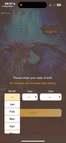
Public preview
Monster Hunter Now
Niantic & Capcom
Open this featured screen to explore the pattern, related categories, and game context. Log in to unlock the full gallery.
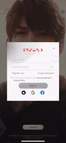
Public preview

Love and Deepspace
Infold Games, Paper Games
Open this featured screen to explore the pattern, related categories, and game context. Log in to unlock the full gallery.

Public preview

Lingokids
Lingokids, Inc
Open this featured screen to explore the pattern, related categories, and game context. Log in to unlock the full gallery.
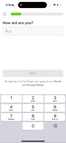
Public preview

Duolingo
Duolingo, Inc.
Open this featured screen to explore the pattern, related categories, and game context. Log in to unlock the full gallery.
More categories in this group
Frequently asked questions
What are Sign up screen references on Flomob?
They are real mobile game screenshots tagged as sign up moments, curated so you can study layout and UX patterns in context.
How do I compare Sign up screens effectively?
Review 3–5 examples, note repeated hierarchy and CTA placement, then document principles that fit your game's goals.
Can I access more screens than the public previews?
Yes. Sign up free to explore the full screen library, filter by game, and save references for your team.
How to use these references
Use this Sign up collection to compare how different games solve the same UX moment. Focus on hierarchy, clarity, and action emphasis rather than copying exact visuals.
Start by reviewing 3-5 examples, note repeated interaction patterns, then adapt those principles to your product goals and design system.